Septic tank pumping in Halifax and area
Routine private-system pump-outs, inspections, backups, and maintenance for homes on on-site sewage across HRM.
About forty-five percent of Nova Scotia homes use an on-site sewage disposal system — a septic tank paired with a disposal field or raised bed. Across Halifax Regional Municipality that means Sackville, Fall River, Hammonds Plains, Prospect, the Eastern Shore, and many other unserviced edges of the city live with tanks that need periodic pumping. People search for septic tank pumping Halifax because a tank is overdue, a sale is pending, drains are slow, or sewage smell has appeared in the yard. This page is about emptying the tank (a pump-out)—not repairing an effluent pump or grinder. Call (902) 999-9999 or request a quote when you are ready to schedule.
Pumping, inspections, emergency response, and maintenance plans solve different moments in the same system. Understanding Nova Scotia Environment guidance, certification language, and what belongs in a quote helps you ask better questions. We keep claims honest: no invented warranties, ratings, or after-hours promises.
Signs you need a pump-out (and signs to diagnose first)
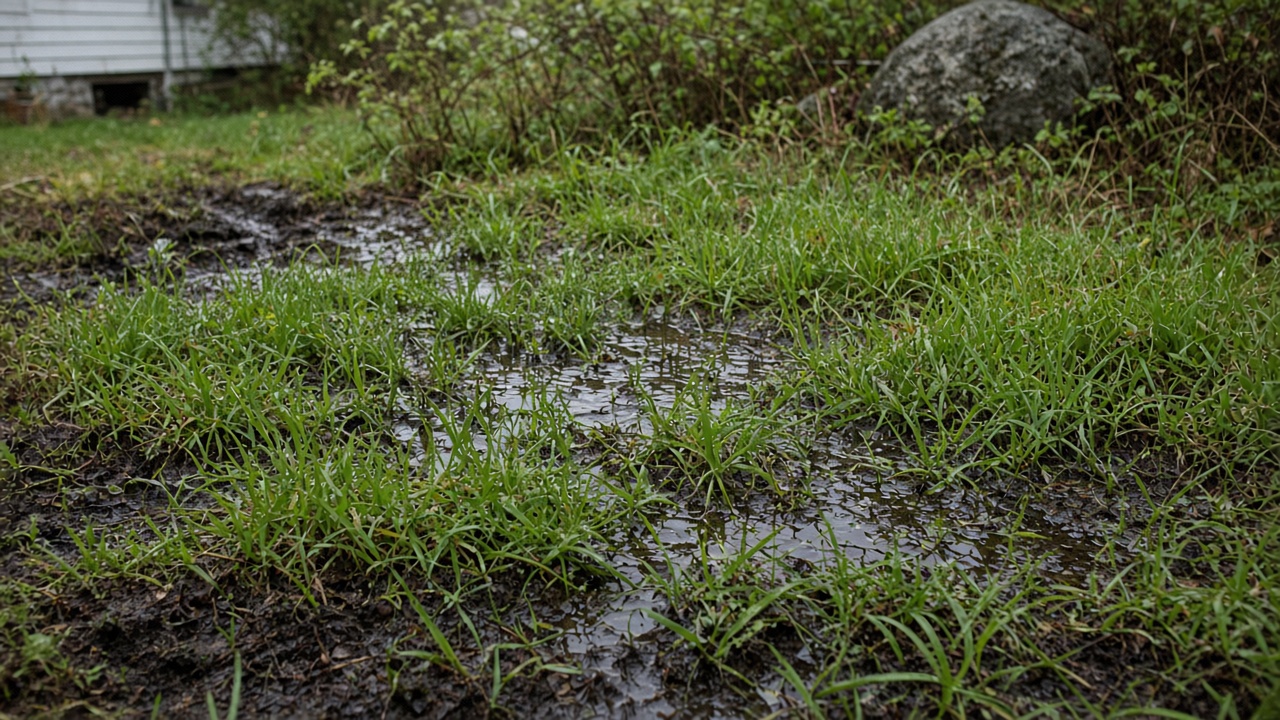
Start with what you can see, smell, and remember. An unknown last pump date is itself a reason to book. Slow drains, gurgling toilets, sewage odours indoors or at the field, wet lush grass over the weeping bed, and pump or grinder alarms all point to a system under stress. Halifax homeowners also watch for “too good” cash offers after disposal-site disruptions — prefer documented cleaners and a receipt.
- Check the calendar — Nova Scotia guidance commonly points to a three-to-five-year rhythm, sometimes two-to-three years with heavy use
- Note odours and ponding — yard smell plus soggy field needs evaluation; indoor backup is urgent
- Ask about the outlet filter — a clogged filter can mimic a full tank or failing field
- Keep records — pump receipts travel with the deed and calm buyers
If water returns to fixtures after you reduce laundry and showers, treat it as more than a one-off overload. A certified Septic Tank Cleaner can empty the tank, look at baffles and filters, and flag field backflow when it shows up.
How often Nova Scotia says to pump
Nova Scotia Environment’s on-site sewage page recommends pumping solids every two to three years depending on use so solids do not carry into the disposal bed. The provincial Homeowner’s Guide says assess the system at least every three years and pump the tank every three to five years. Technical guidelines note that a single-family tank generally needs pumping every three to five years and should be inspected yearly, with sludge and scum measurements guiding the decision. Local Halifax discussions and contractor pages usually land in that same three-to-five-year band for typical households.
Drivers that shorten the interval include more people in the house, a smaller tank, garbage disposals, grease, wipes, and commercial or cottage holding-tank patterns. A cleaner who measures sludge at each visit can tell you whether your household can stretch toward five years or should stay closer to three.

What a proper Halifax pump-out includes
Emptying a septic tank is more than a hose in a lid. A thorough residential job typically locates and opens access lids (digging if there are no risers), measures or at least fully removes sludge and scum, pumps to the bottom rather than skimming liquid, checks inlet and outlet baffles when visible, notes backflow from the field, and hauls septage to an approved disposal site with a receipt for your records. Halifax reviewers repeatedly praise crews that actually clean the tank instead of a quick skim.
Add-ons that protect the field include permanent cleanable effluent filters, riser installs for grade-level access, camera inspection of lines, and holding-tank emptying for seasonal properties. Ask what is included in the quote: dig time, number of lids, filter cleaning, and after-hours fees change the number.

Certification language that actually means something in NS
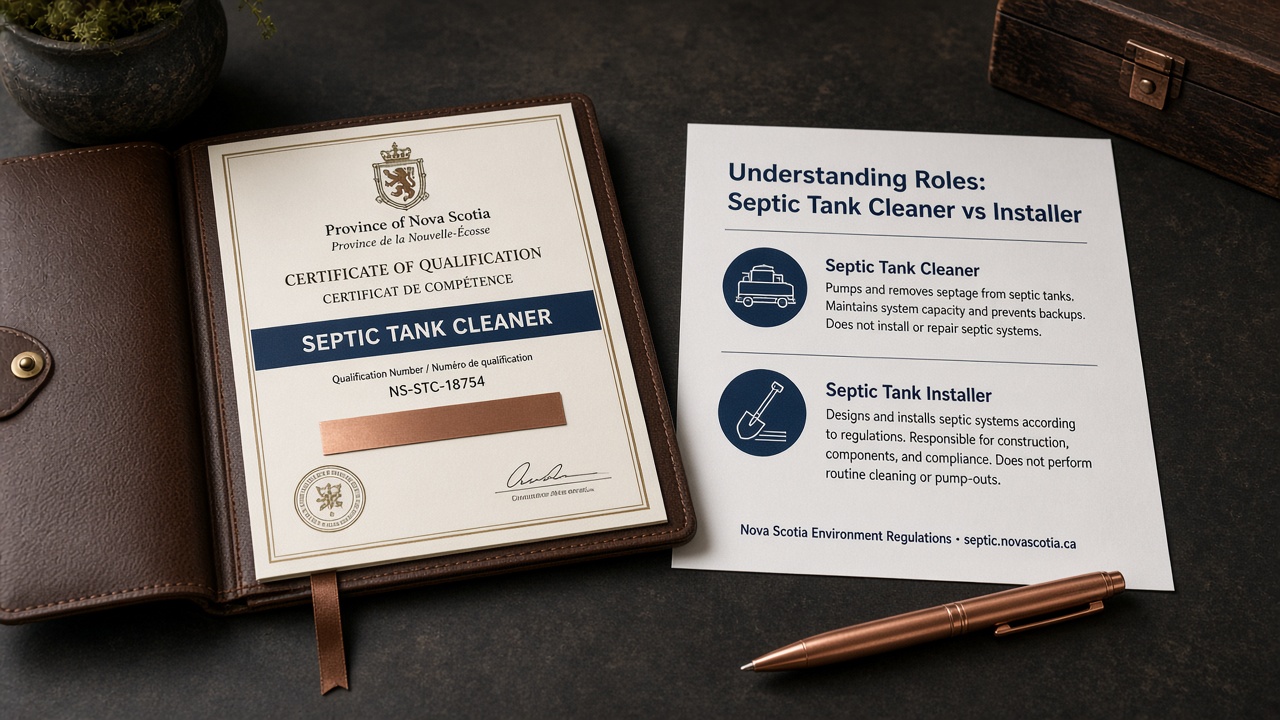
Nova Scotia certifies four on-site roles. The one that matters for pumping is the Septic Tank Cleaner certificate of qualification. That certificate is required to advertise as a cleaner; to pump, repair, or modify tanks, pump chambers, and holding tanks; to pump portable restrooms; or to clean with pressurized water or air. Eligibility includes the Waste Water Nova Scotia course, application and fees, liability insurance, and proof of access to an approved septage disposal site. Continuing education runs on a multi-year cycle.
Vague “licensed with Nova Scotia Environment” wording is weaker than naming the Septic Tank Cleaner certificate and who holds it. Lot owners must maintain proper system function, and certain sewage releases have reporting duties. Install and major field replacement sit on a different track with installers and qualified persons or engineers — do not confuse a pump-out company with a new-system designer unless that capacity is confirmed.
What affects a pump-out quote
A fair Halifax quote reflects the job on your lot—not a generic headline. Ask whether the price covers tank size or volume limits, disposal, travel, lid access, extra hose reach, filter service, and HST. Neighbours sometimes book nearby tanks on the same day when truck routing allows; ask when you schedule. Prefer itemized quotes and disposal receipts over unverified cash-only deals.
What usually changes the number:
- Tank size and how hard the sludge is to remove
- Dig time versus risers already at grade
- Number of lids and hose reach from the truck
- Haul distance to an approved disposal site
- Filter cleaning, after-hours timing, and travel across HRM
Sample quote checklist
Use this checklist when you compare written estimates—ours or anyone else’s—so every bid covers the same job.
- Community or partial postal code and truck access notes
- Tank type if known (septic vs holding) — or “I’m not sure”
- Last pump-out date if known
- Lid or riser location; dig required or not
- Whether disposal, travel, filter service, and HST are included
- Preferred timing and urgency
- What is excluded (camera, riser install, pump repair)
Holding tanks and seasonal cottages
Some HRM and cottage properties use holding tanks that store wastewater until a truck empties them—different from a septic tank paired with a disposal field. Holding tanks can fill faster, affect truck routing, and need clearer capacity notes when you enquire. If you are unsure whether your home uses a septic system or a holding tank, say so when you call; Halifax Water can also advise whether a civic address is on municipal wastewater. Routine residential septic pumping remains the core offer on this site.
Preparing for a pump-out visit
Before the truck arrives, gather what you can: system records or the last service date, whether the lid location is known, driveway or gate access for a vacuum truck, pets, and soft ground or low branches that could block the hose. Ask what preparation the operator wants on your lot. Clear access notes speed the visit and keep the quote accurate.
HRM communities on septic
Much of HRM’s periphery relies on on-site systems: Lower and Middle Sackville, Beaver Bank, Fall River, Windsor Junction, Hammonds Plains, Prospect and Shad Bay, Porters Lake, and Eastern Shore communities appear again and again in local pumping conversations. Winter work is usually possible but harder without risers; shoulder seasons are easier for routine maintenance. Disposal-site capacity can affect scheduling and price — another reason to book before an emergency.

Call (902) 999-9999 for current availability across Halifax and surrounding areas.
From enquiry to empty tank: a typical journey
Most Halifax pump-outs start with a phone call or short form. The dispatcher or owner asks for the civic address or community, whether lids or risers are visible, the last known pump date, and any symptoms such as slow drains, yard odour, or a pump alarm. That intake determines whether the job looks like a routine empty, a dig-to-locate, an inspection add-on, or an urgent backup. Clear driveway access for a vacuum truck matters as much as the tank itself — narrow Eastern Shore lanes and soft spring driveways change the plan.
On arrival, the crew confirms lid locations, protects landscaping where practical, and opens access. A thorough empty takes longer when sludge is hardened after a decade of neglect. When the tank is down, baffles and filters get a look. If effluent runs back from the field, that note belongs on your receipt conversation even if today’s job is “only” a pump-out. You should leave with documentation of disposal. Aftercare is ordinary: keep water use sensible for a day if the field was saturated, clean filters on schedule, and put the next interval on a calendar rather than waiting for smell.
The journey above is industry practice in Nova Scotia, not a promise of specific hours or warranties.
Comparing quotes without getting lost
Two Halifax quotes that look far apart may not be the same job. Align every bid on dig versus riser access, number of lids, filter cleaning, after-hours fees, and whether disposal is included. Ask who holds the Septic Tank Cleaner certificate and where septage goes. Cash-only pressure after dump-site news deserves extra caution — local homeowners have shared rumours of skim pumping and illegal dumping. Prefer a paper trail.
Group or neighbour rates can be real when a truck can hit several tanks on one street in Sackville or Fall River. They are not always advertised. Ask when you request a quote, and use the checklist above so scopes match.
When pumping is not enough
Pumping cannot rebuild a clogged disposal field, replace a collapsed tank, or redesign a system that was never sized for a finished basement suite. Those jobs move into installer and qualified-person territory under Nova Scotia’s on-site framework. A good pumping company still earns trust by saying so early. Camera work, distribution-box repairs, and pump replacements sit in a grey middle — confirm scope before you assume the same truck does everything.
If your goal is a pre-sale clean bill of health, combine pumping with a clear inspection scope. If your goal is stopping tonight’s backup, start with water shutoff and an urgent empty, then schedule the deeper diagnosis when the house is usable again.
Frequently asked questions
How often should I pump my septic tank in Nova Scotia?
Nova Scotia Environment recommends assessing the system at least every 3 years and pumping about every 3 to 5 years, with some NSE pages citing 2 to 3 years depending on use. Household size, tank size, and what goes down the drain move the interval — a cleaner who measures sludge can set your real number.
What affects the price of a septic pump-out in Halifax?
Price depends on tank size, sludge condition, dig or riser access, number of lids, haul distance to an approved disposal site, filter service, travel, and whether the visit is after hours. Local homeowners also cite disposal-site capacity as a cost driver. Ask for an itemized quote that lists those inclusions for your property.
Do I really need regular pumping, or only when something goes wrong?
Yes — solids stay in the tank until removed. Waiting for backups often means solids have already risked the disposal field, which is the expensive failure. Pumping on schedule is cheaper insurance than a new field.
Who is allowed to pump septic tanks in Nova Scotia?
A person with a Nova Scotia Septic Tank Cleaner certificate of qualification (course, insurance, approved disposal access). Ask to see current certification; assistants working under a certified cleaner are treated differently under the rules.
Will the crew actually clean the tank or just suck out liquid?
Homeowners specifically recommend companies that clean, not skim. A proper job opens access and empties sludge to the bottom, and should note baffle and filter condition. Ask what is included before booking.
Should I worry about cash-only deals after dump-site issues?
Local commenters have warned about sketchy cash operators who may not pump properly or dispose legally. Prefer documented companies, non-cash payment trails, and a disposal receipt.
Do septic additives replace pumping?
Nova Scotia Environment says additives are unnecessary because tanks already have microbes; periodic pumping is the reliable maintenance. Many practitioners say monthly powders at best do nothing and at worst harm fields.
About 45% of NS homes are on septic — does that change anything for Halifax buyers?
It means on-site systems are normal across much of rural and suburban HRM. Buyers should still demand pumping history and a competent inspection — septic is manageable with maintenance, costly when neglected.
Can you pump in a Nova Scotia winter?
Usually yes, but frozen ground and buried lids make access harder; risers to grade help a lot. Many homeowners schedule routine work in shoulder seasons.
What should never go down a septic system?
Keep inputs to wastewater and toilet paper. Avoid wipes, diapers, grease, solvents, and paint, and treat garbage disposals as high-risk. Spread laundry and fix leaks so you do not hydraulically overload the field.
Services
Septic tank pumping
Full pump-outs that empty sludge to the bottom and protect the disposal field.
Septic inspections
Buyer, seller, and maintenance checks with clear scope—not camera-only by default.
Emergency services
Backup and overflow triage, water-use steps, and when to call for an urgent empty.
Maintenance plans
Filter cadence, pump intervals, and records that travel with the property.